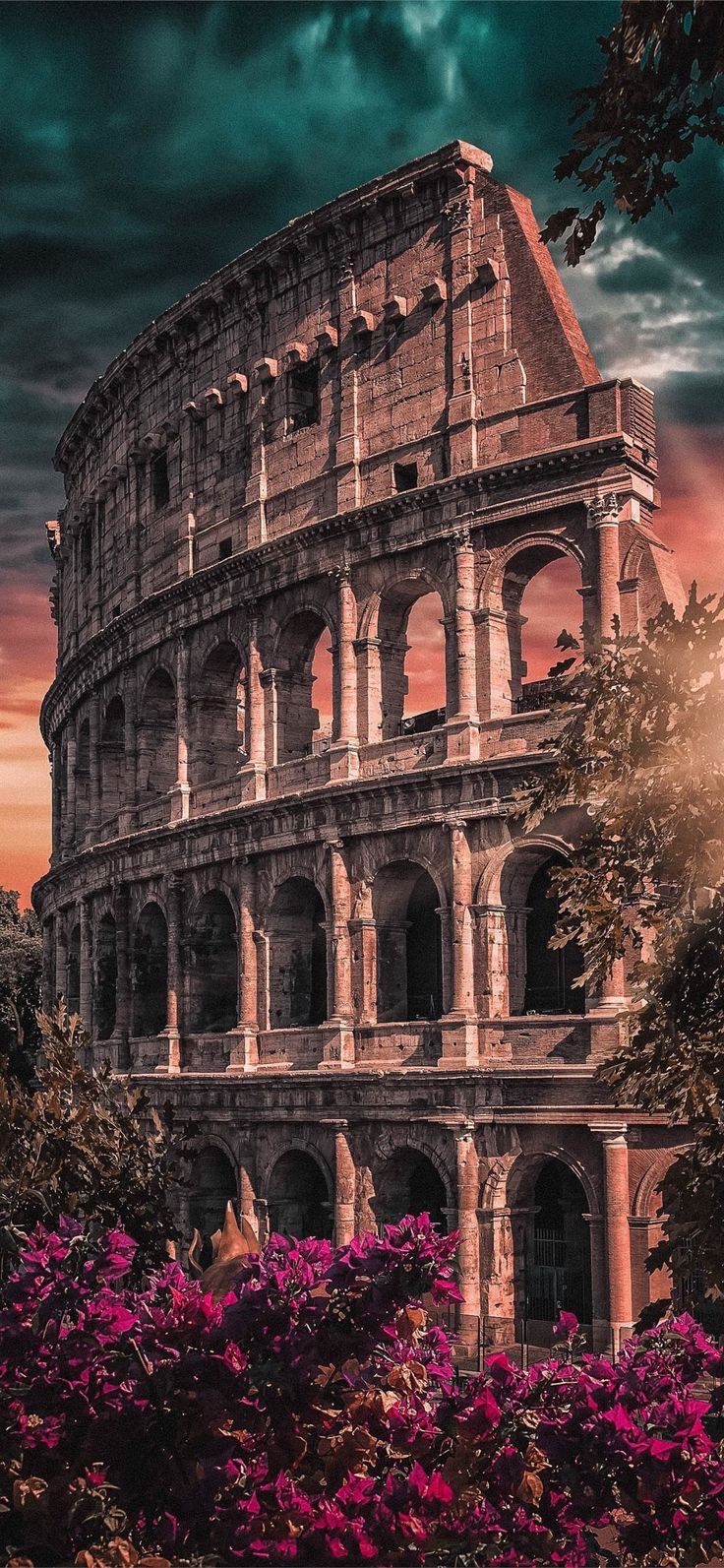
Rome: A journey from a small town along the Tiber to one of the greatest empires the world has ever known. An empire that encircled the Mediterranean and dominated all who opposed its vision of civilization. This is the story of its rise, its golden age, and its eventual decline and fall. A tale of ambition, innovation, and resilience that continues to inspire and captivate.
The Birth of Rome: From Myth to Kingdom
Rome is said to have been founded by the mythological twins, Romulus and Remus, who were born to a vestal virgin and abandoned at birth. Found and raised by a she-wolf, the brothers sought to establish a city, but quarrelled over its location. The conflict escalated, leading to Remus’ tragic end at the hands of his brother. Romulus, the sole remaining ruler, established a city on the Capitoline Hill dating to 753 BC, called Rome, a city born from civil strife.
Rome was founded but lacked inhabitants. To address this, Romulus offered refuge to runaway slaves and criminals, forming a population composed entirely of men. To secure wives for his citizens, he organized a religious festival during which the women of neighboring tribes were kidnapped. This event, known as the rape of the Sabines, provoked a series of conflicts as Italian tribes retaliated against Rome. Ultimately, the Sabine women intervened, bringing peace and uniting the tribes, and giving birth to the kingdom.

From Kingdom to Republic: The Fall of Rome’s Kings
The kingdom was ruled by seven kings, beginning with Romulus, a warrior who expanded Rome’s territories, and ending with Tarquin the Proud, a tyrant whose cruelty led to the monarchy’s downfall and paved the way for the Republic. Much of this early history is unreliable, due to the scarcity of sources. The stories of the kings had been passed down from generation to generation orally, before being recorded by the historian Livy, who wrote his work “The History of Rome” between 27 and 9 BC.
The kings initiated reforms that left a lasting impact on Rome. The key reforms include the establishment of religious practices and institutes, the creation of the 12-month calendar, and the introduction of the census, which organised society based on wealth and military duty. Nevertheless, the monarchy was overthrown following the rape of a noblewoman by Tarquin’s son and was replaced by the republic.
The Roman Republic: Struggles for Power and Unity
The republic, beginning in 509 BC was governed by two consuls elected annually aiming to prevent any individual from getting too powerful: A direct reaction against the tyranny they had faced under the last king. The consuls were supported by the senate, an advisory council composed of Rome’s aristocratic elite, which held immense power. This balance of power was designed to ensure that power was not concentrated, but how successful was it? Certain figures would later find loopholes, taking control of and challenging the stability of the republic.
The early years of the republic were marked by conflict between social classes, the patricians and the plebeians. Lacking political power and rights, the plebeians sparked a series of conflicts, notably the conflict of the orders to elevate their social status. Two centuries of struggle would eventually culminate in the creation of the twelve tablets, Rome’s first written laws, guaranteeing basic legal protection for all Romans. This unity within Rome laid the foundations for expansion and conquest.
The years between 340 and 272 BC saw Rome at war with various Latin tribes, as well as the Greek city states of southern Italy. Though costly, these wars allowed Rome to subdue her enemies, and exercise complete control over the Italian peninsula. The greatest challenge Rome had faced hitherto was King Pyrrhus of Epirus, a brilliant general who significantly tested the Republic’s resilience. (The term Pyrrhic victory was coined due to his costly victories.)
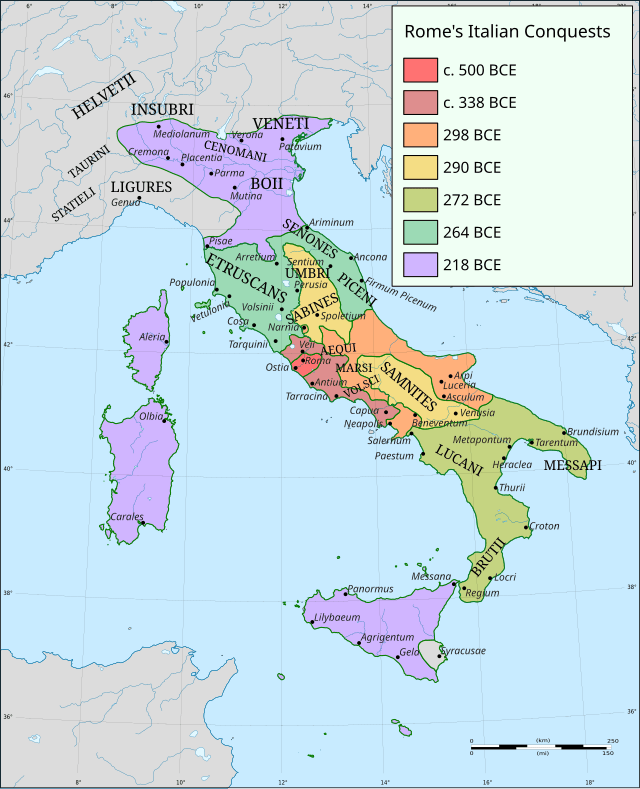
The Punic Wars: Rome vs. Carthage
Across the sea lay Carthage, the dominant superpower of the Mediterranean. Amassing immense wealth and power through its vast resources and extensive trade network Carthage stood as Rome’s greatest rival. Rome, seeking to challenge Carthaginian dominance and gain control of the Mediterrenean, engaged in a series of conflicts called the Punic wars, spanning from 264 to 146 BC, culminating in Carthage’s destruction.
The First Punic War began as a struggle for control over Sicily. With superior naval expertise, Carthage initially dominated the seas. Rome, however, adapted quickly, imitating Carthaginian ships and naval tactics. Meanwhile, on land, Rome fought for dominance in Sicily and even launched an invasion of the Carthaginian homeland. The war ended in 241 BC, with Carthage ceding Sicily, Sardinia, and Corsica. This marked Rome’s rise as a Mediterranean power and set the stage for greater conflicts.
Following the defeat, Rome faced its greatest foe, Hannibal Barca who nearly brought the republic to its knees. Leading his army through the deadly Alps, he suffered severe losses due to freezing temperatures. Hannibal, a brilliant strategist, exploited Roman predictability, luring their armies into devastating traps. Whole Roman armies were wiped out in battles such as Cannae, Trebia, and Lake Trasimene, stunning victories that cemented his legacy as one of history’s greatest generals.
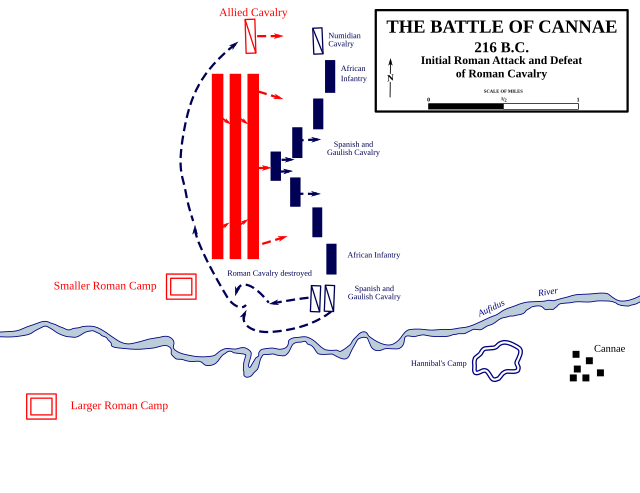
Rome appointed a ‘dictator’ during emergencies, granting absolute authority for six months. Following Hannibal’s victories, Fabius Maximus assumed this role. His strategy avoided direct engagements, relying on guerilla war tactics to harass Hannibal’s supply lines. Weakening Hannibal, who needed decisive victories to maintain the loyalty of his Italian allies. While Fabius’ tactics, now known as the Fabian strategy, were brilliant, they earned him heavy criticism in Rome, where he was named a coward.
Fabius’ strategy gave Rome much needed time to recover. After spending over two decades in enemy territory without reinforcements, Hannibal’s position weakened. Seizing the opportunity, Rome launched an Invasion of Carthage’s homeland, forcing Hannibal to return. The Second Punic War concluded at the Battle of Zama, where Scipio Africanus, one of Rome’s greatest generals, defeated Hannibal on Carthaginian soil.
Rome’s conflict with Carthage came to a conclusion in 146 BC in the Third Punic War where Carthage was besieged, and burnt to the ground, leaving Rome the undisputed ruler of the Mediterranean.
During the Second Punic War, Macedonian king Phillip V allied himself with Hannibal to confront Rome. In return, Rome supported the Greek states against Phillip in the Macedonian Wars, further expanding Roman influence to the east. Rome was finally considered the sole master of the region following the sacking of Corinth in 146 BC when independent Greek history came to an end.
The Fall of the Republic: Civil Wars and Caesar
As Rome’s borders expanded, so did her internal problems. To counteract this, the Gracchi brothers, as Tribunes of the Plebs, introduced reforms to strengthen the army by increasing pay, granting land to veterans, and grain to the plebeians. Both were murdered by patricians who opposed these changes, effectively nullifying their work. Their deaths marked a turning point, exposing the deep divisions between the patricians and plebeians that would plague the Republic.
In the last century of the Republic, generals commanded personal armies. Among them were Sulla and Marius, two immensely powerful rivals. When Sulla’s Mithridatic command was reassigned to Marius, Sulla marched on Rome, sparking civil war and forcing Marius to flee to Carthage. Marius eventually returned to Rome, seized power, and initiated bloody purges, but he died shortly thereafter. Sulla, after securing victory in the Mithridatic War, returned and established himself as dictator, instituting reforms that temporarily stabilized Rome before stepping down. With both generals gone, a power vacuum emerged, soon to be filled by ambitious men.
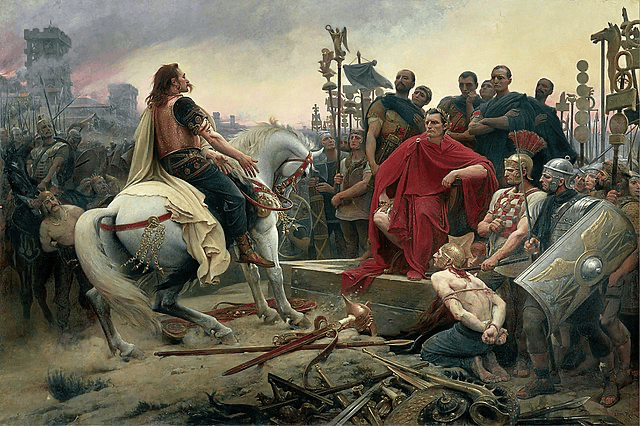
Among these ambitious men was Caesar, who gained immense power and wealth following his Gallic Wars that spanned from 58 to 50 BC against the Gauls, led by Vercingetorix. His campaigns secured a wealthy and powerful province for Rome, flooding its markets with gold. The campaign’s success was due to Caesar’s brilliance in leadership and strategy. His legions marched swiftly into enemy territory, striking before the Gauls could unite. Exploiting divisions among Gallic tribes, Caesar spurred chaos and ensured their disunity. His mastery of engineering played a pivotal role, from constructing a massive bridge over the Rhine to his stunning double-wall fortifications in Alesia, where he crushed the largest Gallic resistance. Through speed, strategy, and ingenuity, Caesar brought Gaul firmly under Roman control and earned himself immense power and wealth. His growing influence, however, alarmed the Senate, setting the stage for an inevitable confrontation.
Caesar was ordered to disband his army and return to Rome as a private citizen. He agreed, on the condition that Pompey do the same. When Pompei refused, Caesar led his legions across the Rubicon declaring ‘the die is cast’. Civil war had yet again begun, one that threatened the very essence of the Republic.
Caesar’s civil war against Pompey began in 49 BC and lasted 4 years. Caesar’s decisive victories, like at the battle of Pharsalus, forced Pompey to flee, only to be assassinated in Egypt. Caesar’s triumph secured his position as Rome’s unrivalled leader, when he was appointed dictator for life, signalling the Republic’s end and the rise of imperial rule.
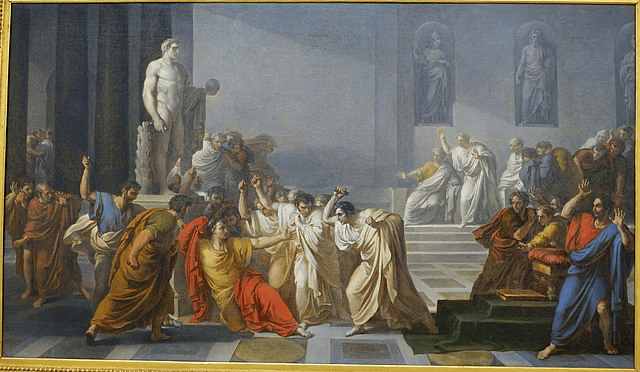
Caesar was assassinated by 60 senators in 44 BC. His supporters, Mark Antony and Octavian, avenged him before fighting against each other. The republic’s final civil war climaxed at the Battle of Actium in 31 BC, after which Antony fled and later died in Alexandria. Octavian emerged victorious, becoming Augustus.
Augustus and the Rise of Empire
Augustus, Caesar’s adopted heir became sole ruler following the Battle of Actium. Even though he was praised for restoring the republic, he effectively became emperor instead, while branding himself as princeps, first citizen. Through a clever accumulation of offices, Augustus wielded authoritarian powers while maintaining the outward framework of the Republic.
Augustus orchestrated many reforms and building projects to heal the dying republic. He came to Rome when it was a city of stone, and left it a city of marble with the help of Marcus Agrippa, who was crucial in Augustus’ rise to power. He increased water and grain distribution into the city, established a fire and police department, and the Praetorian guard, veterans garrisoned in Rome to defend the emperor. Religious reforms aimed at increasing childbirth by penalizing unmarried men and childless couples.
His greatest achievement was initiating the Pax Romana, a 200 year era marking the undisputed height of the Roman Empire, a period defined by stability, economic prosperity, and cultural flourishing. With secure borders, trade thrived across the provinces, connecting the empire from Britain to the Levant. This peace enabled Rome to focus on governance, legal systems, and integration, leaving a legacy that shaped both the ancient and modern worlds.
The Julio-Claudian dynasty starting with Augustus failed to live up to his legacy. His successors differed sharply in competence and ambition. Tiberius was a capable ruler but preferred to stay in isolation, relegating much of his power to others while he retired to a remote island, whereas Caligula and Nero became infamous for their cruelty and tyranny, marked by purges, abuses of power, and acts of violence that destabilized the empire. Claudius, an unexpected emperor, proved many wrong with his notable successes, restoring order and achieving significant victories, such as the conquest of Britannia, a feat even Caesar had failed to accomplish. In contrast, Nero’s reign ended in chaos. His suicide in 68 AD led to the so-called Year of the Four Emperors, a period of civil war where rival generals fought for control over Rome. This turbulent year ended with Vespasian’s victory, marking the beginning of the Flavian dynasty.
The Flavian Dynasty: Restoring Stability
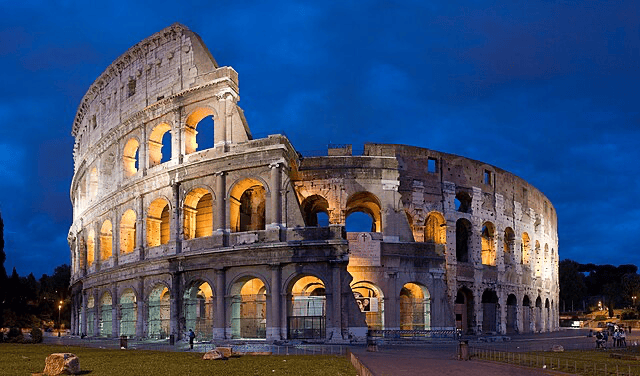
Stability and order returned under Vespasian following a year of civil war. His reign saw significant construction projects, most notably the Colosseum and the Arch of Titus, which commemorated his son Titus’ victory in the First Judean War, during which Jerusalem and its temple were destroyed. To replenish the treasury following the civil war, he introduced tax reforms, including a controversial tax for urine, a commodity used in the laundry industry. Propaganda flourished during his reign, with historians like Pliny and Tacitus writing favourably about him, while sceptics were harshly punished. Titus, though ruling briefly, is remembered for his effective handling of major crises, including the eruption of Mount Vesuvius and a devastating fire in Rome. His swift and compassionate response earned him widespread admiration and solidified his reputation as a just and capable ruler.
Domitian, the final emperor of the Flavian dynasty, is often depicted as a cruel tyrant by senatorial sources, our primary accounts of his reign. Domitian centralized control by micromanaging various aspects of the Roman government, significantly reducing the Senate’s influence. He pursued diplomacy over conflict, ensuring a period of peace that allowed Rome to recover and rebuild. Domitian also increased military pay and implemented economic reforms, including restoring the silver content of coins to combat inflation caused by his predecessors’ extravagant projects. Though he was loved by the people and the army, Domitian’s centralized control earned him the hatred of the elite, ultimately leading to his assassination. Despite his achievements, Domitian’s memory was condemned after his assassination in 96 AD, with his name and statues erased in an act of damnatio memoriae (condemnation of memory).
The Five Good Emperors: Rome’s Golden Age
During the period of the Five Good Emperors, starting with the ascension of Nerva and ending with the death of Marcus Aurelius, the empire, still under the Pax Romana, reached unprecedented heights of peace, prosperity, and territorial expansion. Nerva stabilised Rome following Domitian’s assassination, wisely naming Trajan as his heir. Trajan, one of Rome’s greatest emperors and a celebrated general, expanded the empire to its largest territorial extent. His conquests in Dacia not only secured vast gold mines but also solidified Rome’s dominance in the Danube region. In the East, his campaigns against Parthia brought the empire as far as the Parthian capital, Ctesiphon.
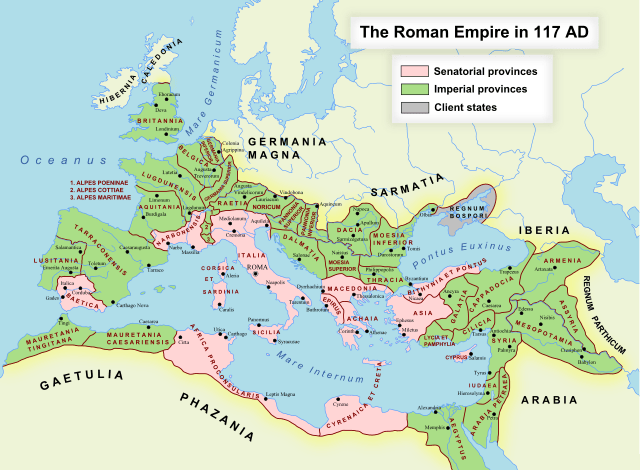
Upon ascending the throne, Hadrian, a pragmatic leader, chose to prioritize stability over expansion. He withdrew from Parthia and built Hadrian’s wall in Roman Britain, recognizing the logistical and strategic difficulties of holding such distant territories, and focused on fortifying Rome’s existing borders.
Antoninus Pius presided over the most peaceful period in Roman history. He spent his entire reign within Rome’s boundaries, never venturing abroad. Pius completed many of Hadrian’s unfinished projects, quelled a rebellion in Britain, and constructed the Antonine Wall, setting new boundaries to the north of Roman Britain. Trade and commerce as well as the arts flourished under his virtuous reign.
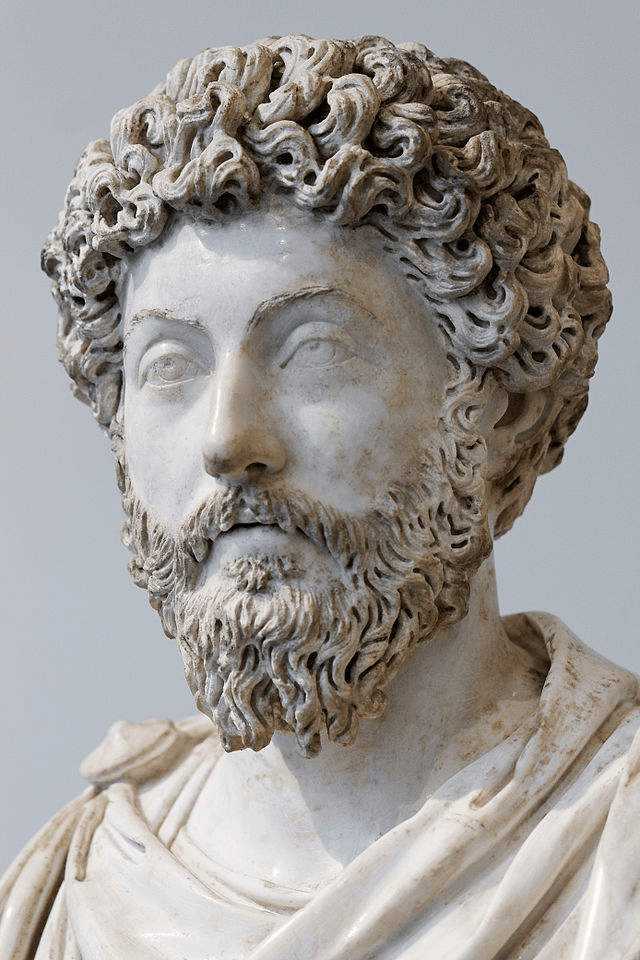
The last of the Five Good Emperors, Marcus Aurelius, was a brilliant emperor, and a patron of stoic philosophy. His book titled The Meditations is fundamental to the practice of stoicism. His reign was marked by constant warfare, notably against Germanic tribes along the Danube. His co emperor Lucius Verus led a successful campaign against Parthia, returning to Rome in triumph. The legions brought with them the Antonine Plague, a devastating epidemic that would spread through the empire from 165 to 180, weakening its population and military strength.
The empire’s golden age ended with the abandonment of the tradition of adoption. The Five Good Emperors had all been chosen for their merit and brilliance. Marcus Aurelius named his biological son Commodus as his successor. Commodus, a cruel tyrant, disrupted the peace and prosperity of the Pax Romana, whose assassination in 192 marked the beginning of the turbulent Year of the Five Emperors.
The empire fell back into tyranny after the brief moment of respite during Septimius Severus’ reign. The following emperors went from bad to worse, until the chaos Rome had endured was briefly over. Stability returned during the long and prosperous reign of Severus Alexander, but his assassination at the hands of his own troops marked the beginning of the Crisis of the Third Century.
Aurelian to Constantine: Saving Rome
Between 235 to 285, the Roman Empire plunged into chaos. During the 50 years known as the Crisis of the Third Century 27 men declared themselves emperor. The year 238 marked by the rise of 6 claimants to the throne, further fractured Rome’s already crumbling political landscape.
Plagued by internal corruption and anarchy, Rome also faced relentless external threats from the Goths and the Persians. Three emperors and countless legions fell to these powerful adversaries, leaving the empire fractured and its borders in chaos. The stage was set for a leader who could unite the shattered pieces of Rome and restore its former strength.
Amidst the anarchy, breakaway states emerged, threatening to dismantle Rome’s legacy. A man known as the Restitutor Orbis, the Restorer of the World, rose to save the empire: Aurelian, an outstanding general who rose through the ranks and was declared emperor by his soldiers. He repeatedly led the Roman legions to victory, until all of Rome’s enemies had submitted to his sword. Tragically his reign was cut short, when he was assassinated by his own generals, who feared punishment for their corruption. In five short years, he saved a dying empire, adding centuries to its lifespan. Yet, the task of fully restoring Rome’s glory would fall to another.
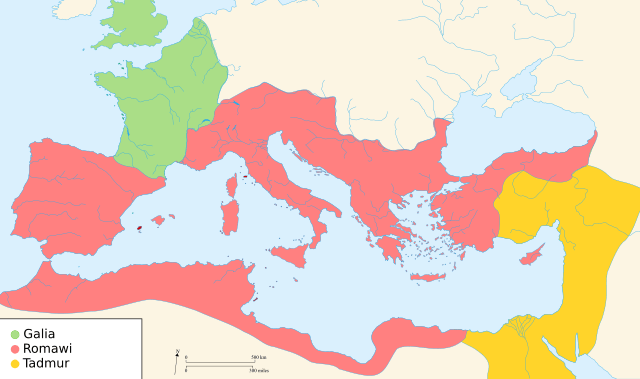
Diocletian became emperor in 284, bringing an end to the Crisis of the Third Century. Recognizing that the empire had grown too vast for a single ruler, he introduced the tetrarchy, dividing the empire into four parts, with two senior and two junior emperors, to improve governance and defence. Diocletian also increased the army’s pay, commissioned major building projects, and was the first emperor to voluntarily abdicate the throne.
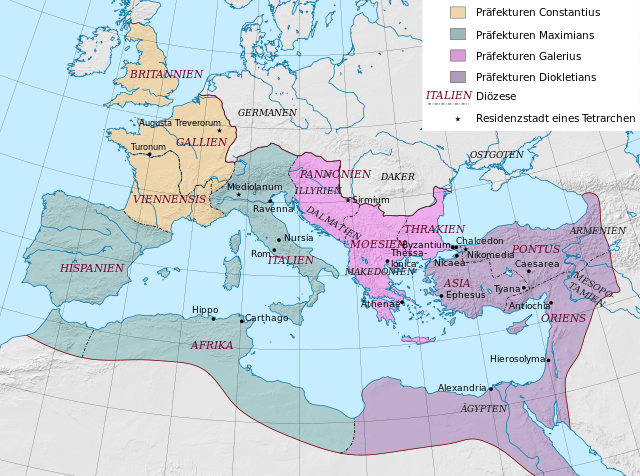
Constantine came to power in 306, a year after Diocletian’s resignation, leaving an indelible mark on the empire. He issued the Edict of Milan in 313, ending the persecution of Christians and established religious tolerance. Constantine founded a new capital city, which he named after himself, Constantinople, a bridge between Europe and Asia, the centre of the Byzantine Empire. Constantine laid the foundations for Christianity to flourish as the empire’s dominant religion. Constantine built on Diocletian’s military and administrative reforms, strengthening the empire’s structure while dismantling the Tetrarchy, consolidating power under himself.
Shadows on the Horizon
The fourth century witnessed the rise of a formidable new force: The Huns. Their arrival disrupted the balance of power in Europe, driving Germanic tribes south into the borders of the Roman Empire. Among them were the Visigoths, who entered the empire seeking refuge in 376. However, mismanagement and humiliation at the hands of Roman provincial governors drove them into open rebellion. The events would culminate in the catastrophic Battle of Hadrianople.
Fought in 378 in modern day Edirne, the Roman Army led by Valens, recklessly engaged the Visigoths without waiting for reinforcements. It was a slaughter. The Romans were encircled, overwhelmed and annihilated. Valens himself perished on the battlefield, marking one of the darkest moments in Roman military history.
Theodosius the Great: The Last Emperor of the United Empire
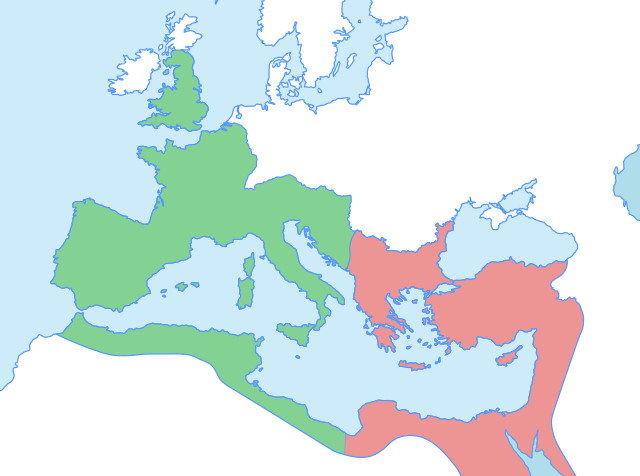
Emperor Theodosius the Great was the last emperor to rule both halves of the empire. He fought two civil wars that strained the Roman army, weakening border defences. One of his greatest legacies was the establishment of Christianity as the official state religion in 380, a move that both unified many of his subjects under a common faith and granted the Church great influence in secular affairs. Upon his death in 395 his infant sons inherited the western and eastern halves, ruling as puppet emperors, which severely undermined the strength of both parts.
The End of the Eternal Flame
Rome, once the mistress of the world, succumbed to its wounds nearing the end of its existence. The once glorious city was sacked twice in the fifth century, first by Alaric and the Visigoths in 410, and later by the Vandals in 455. A glimmer of hope emerged with Emperor Majorian, who ascended the throne in 457. During his short reign, he fought effortlessly to reclaim lost territories, end corruption and restore the crumbling state. Yet, his efforts were opposed by Ricimer, a powerful barbarian general who sought to control the empire through puppet rulers.
Majorian’s assassination in 461 extinguished any hope of restoration. The emperors who followed were weak and easily manipulated, serving as mere pawns in Ricimer’s hands. The end came in 476, when the last Roman Emperor was deposed by the barbarian king Odoacer. With this, the Eternal City of Rome fell, marking the end of antiquity and the dawn of the Middle Ages.
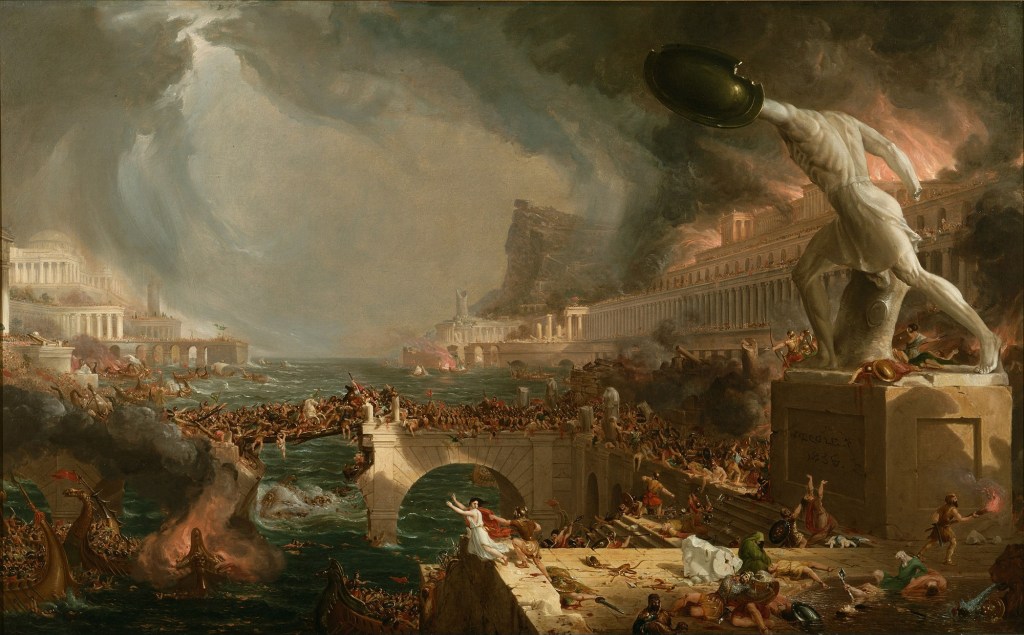
Rome began as a modest city and rose to dominate the Mediterranean under emperors like Augustus and Trajan. Yet, it nearly collapsed during upheavals such as the Crisis of the Third Century. Historian Edward Gibbon argued that Rome’s decline started as early as 98 AD, fueled by internal strife that weakened the empire against external threats. After its permanent division, the Western Empire succumbed to invaders soon after, while the Byzantine Empire upheld Rome’s legacy for another millennium until the fall of Constantinople in 1453. The influence of Roman law, governance, and architecture continues to shape the foundations of modern societies around the globe.
There was once a dream, a dream called Rome