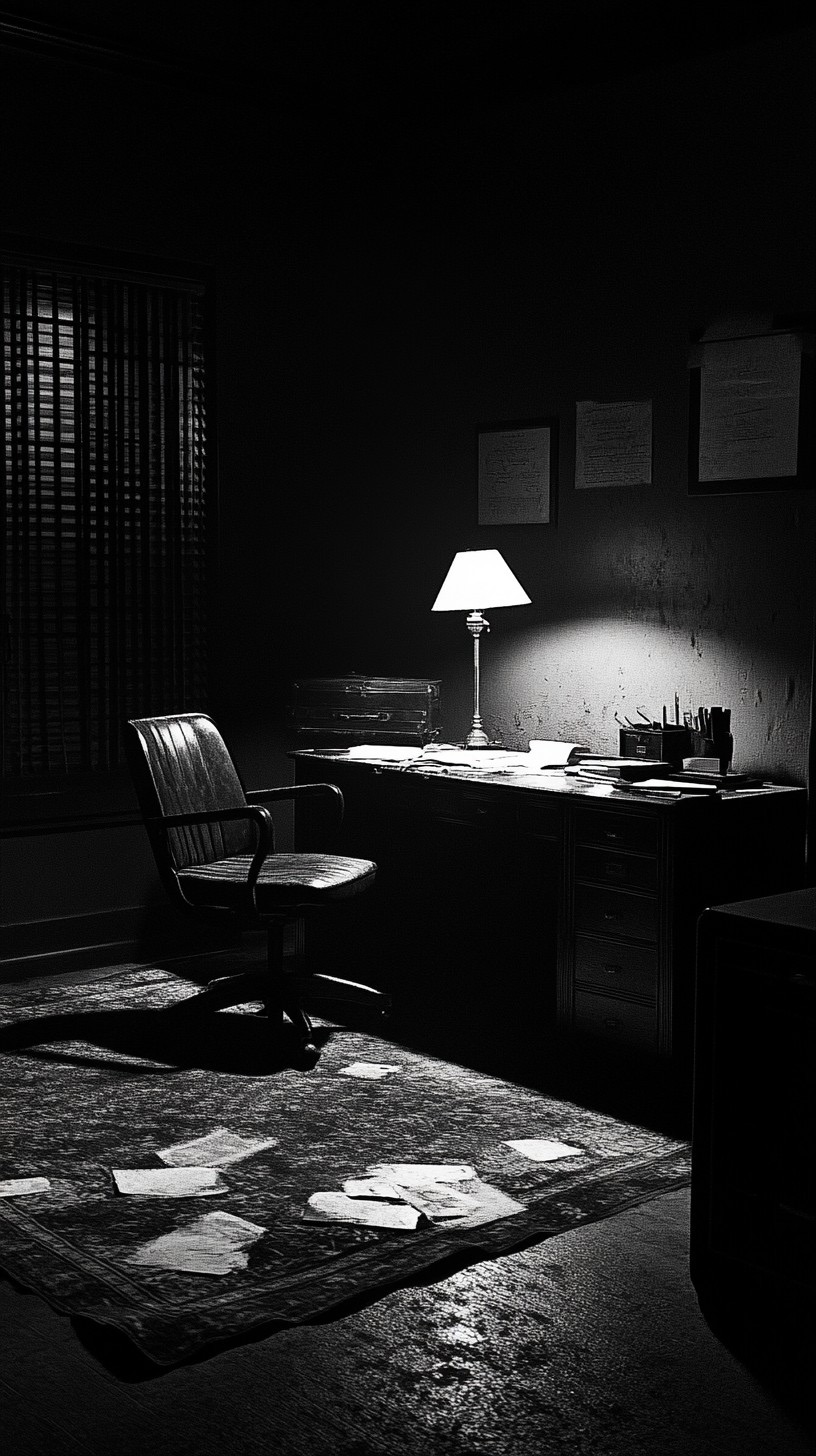
I am the head of a prison, tasked with overseeing the records of all patients housed in our premises. The files are locked in a secret compartment beneath my desk, which is further sealed away by gated iron doors.
I had joined the prison as a guard, thirty-five years ago. Since then, I have been offered bigger rooms, and higher positions. All that was asked of me in return was silence, regarding what I had, and would continue to witness. I have kept my oath, not once have I ever come close to breaking it. The nature of our establishment forbids speech. I have resorted to writing my confession. It will be hidden among the vast records of our bureaucratic system.
Our prison is reserved for those who have opposed the state, and relentlessly stood by their beliefs, even when it cost them everything. We are tasked with extracting confessions of traitors, admissions of the atrocities they had committed, and the names of their comrades. This is a deliberate procedure which requires precision and care in order to avoid inflicting an early demise. It makes little difference how or when they die, as long as they have admitted to their wrongdoings, thus justifying all that we have done to them, and framing us as protectors of the state and its people. I have witnessed this fewer than a dozen times, across the many decades and tens of thousands of young men whom we have interviewed. We are, after all, reserved for the stubborn. Those who have an ideology worth more than the air they breathe.
Upon their arrival, a new file is added to our records containing their name written under a photograph of the prisoner’s face. A short biography is made using any information provided to us by the state, or in rare cases, extracted directly from the prisoner. The date of their entry is noted in order to improve our accuracy in handling the process at each stage. Recording the date of their confession alongside that of their entry is crucial, as our primary goal is to minimize the interval, and free up space in our holding cells. Under my leadership, we have achieved considerable improvement in ridding the state of her enemies, at an increasingly faster pace.
A practice regularly implemented is the surgical removal of body parts that grow in size depending on the severity of the tumor. In some cases, extraction has been suboptimal, and several limbs had to be removed. Our patients are kept awake during the course of the experiment, as their reactions provide us with measurable indicators, allowing us to adjust the intensity accordingly.
There was one case earlier this year that carried the highest expenditure I had overseen in the time I have sat on this chair. A room was reserved for him for several months. He was fed and his wounds were monitored. Vast sums were spent on the operations conducted upon him. It was especially important to get a successful extraction, as his tumor was of considerable size and importance to the state. It would provide her with information that would revolutionize treatment across all facilities across the country. But we failed. The tumor had sculpted itself to ensure a perfect fit into his skull, and could no longer be removed. For four months I provided him with extensive care, and the most experienced personnel I had available. Yet I received nothing in return, other than complaints from those in larger rooms than mine.
He could no longer take part in the interview procedure. He had swallowed his tongue the night before, after enduring the longest and costliest surgeries without yielding. Without having spoken once. He was packaged up and sent to where he had come from, and we were given a new candidate the next day. Only after I had opened a new file and begun filling out the intake form did I read the name.




Leave a Reply