Glossary
Denarius: The standard Roman silver coin
Denarii: Plural form of Denarius
Aureus: The standard Roman gold coin
Congiarium: A liberal donation given to citizens and/or soldiers
Stipendium: A cash payment, standard salary of Roman soldiers
Sestertius: A bronze Roman coin
Sesterces: Plural form of Sestertius
Legion: A group of Roman soldiers, typically consisting of 5000-6000 troops
Caledonia: Roman province, modern day Scotland
Antonine Wall: Turf fortifications along the central belt of Scotland
Hadrian’s Wall: Fortifications splitting Northern England from the unsubdued tribes of Caledonia
Limes Germanicus: Frontier fortifications that separated the Roman Empire from the unsubdued Germanic tribes
Germania Superior: Roman province, modern day western Switzerland
Germania Inferior: Roman province, parts of modern day Netherlands, Belgium, Luxembourg, Germany
Praetorian Guard: Bodyguards of the emperor that were permanently stationed in Rome
Dacia: Ancient kingdom, modern day Romania
Dacian: An inhabitant of the Dacian kingdom
Iron Gates: A gorge on the river Danube, forms part of the boundary between Serbia and Romania
Moesia: Roman province, modern day Balkans
Stuprum: Illicit sexual conduct
Introduction
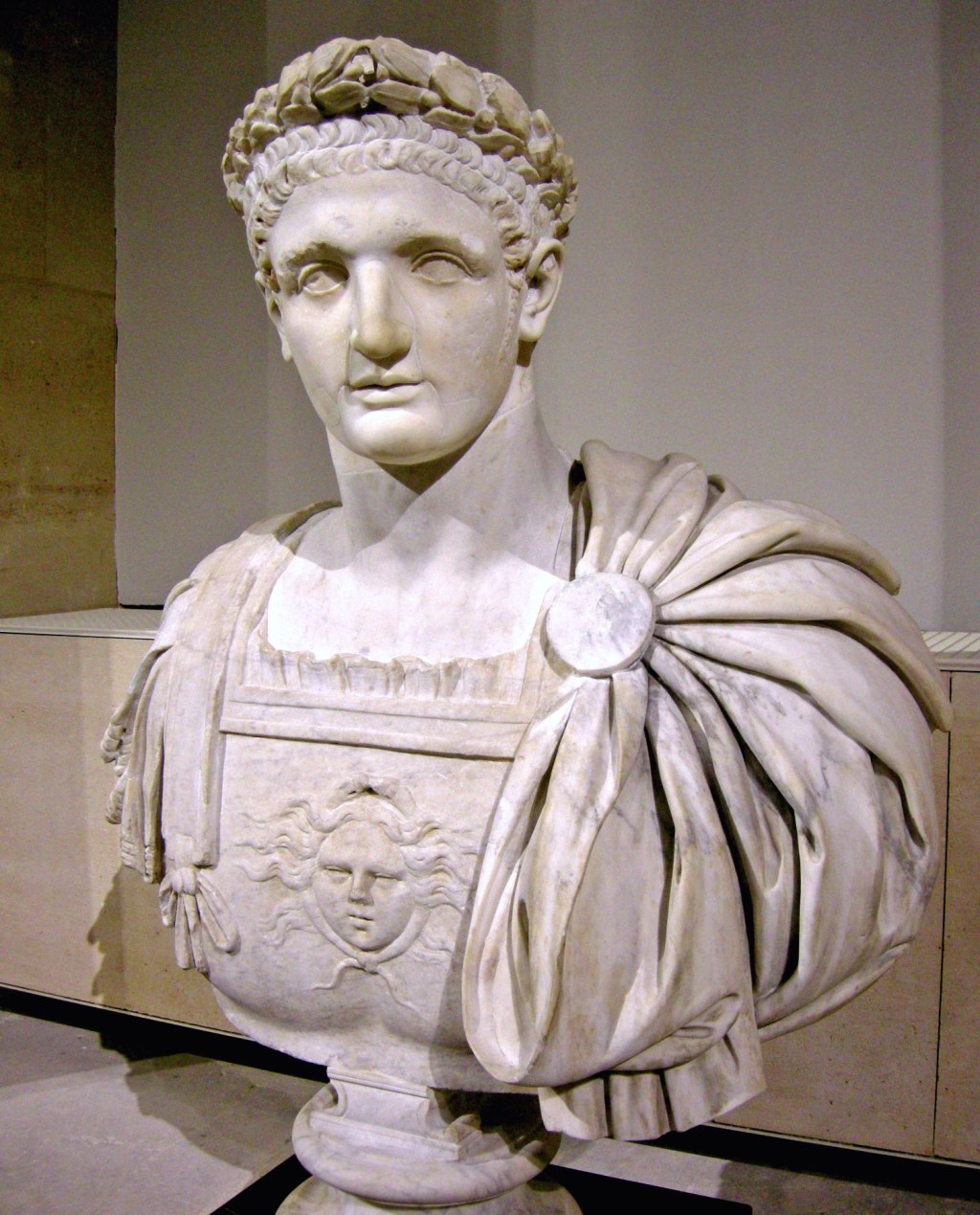
Domitian, son of emperor Vespasian and younger brother of emperor Titus, ruled the Roman Empire from 81 till his assassination in 96 AD. He is known to be a notoriously authoritarian leader who micromanaged Roman government and administration. It is generally agreed that he ruled the empire with an iron fist, weakened the senate, exterminated his political opponents, and supposedly demanded to be called dominus et deus, i.e. “lord and god”. Such actions earned him heavy opposition among the humiliated senate, which then branded Domitian as a cruel tyrant. Ancient historians such as Tacitus and Suetonius, who predominantly wrote long after Domitian’s assassination, have all scolded him potentially due to personal bias. However, modern historians such as Varner and Blackaby challenge this view, using numismatics, administrative records, and architectural projects, arguing that he was an effective and capable ruler. This essay will assess whether his negative reputation was justified, by observing his ruling style, policies and reforms and questioning the senatorial bias surrounding him through the analysis of modern and ancient historical sources. There will be an emphasis on Tacitus, who was the first historian to write about Domitian. The chosen historical method in formulating this research is comparative source criticism.
Domitian’s Reign
Domitian was the third and final ruler of the Flavian dynasty. Sidelined for most of his youth, he received no special education as prince, but was trained as an ordinary noble. He ascended the throne at age 30 due to the untimely death of his well prepared brother Titus. Domitian inherited a crumbling empire from his predecessors, torn apart by civil strife (Wasson, 2021), internal rebellions and natural disasters (Galimberti, 2016, 76) which ruined the empire’s stability. He enacted various reforms and projects to fix the state of the empire, limit corruption, and ensure long term stability. This, although greatly improved the wellbeing of the empire, earned him hatred among senators, whom he supposedly treated and oppressed harshly in order to accomplish his plans.
Governances & Financial Policy
Domitian’s financial administration of the empire was successful despite inheriting a depleted treasury from his predecessor Titus (Rogers, 1984, 62). In order to refill the treasury and ensure a stable economy, Domitian enacted various reforms to counter inflation, such as increasing the silver purity of the Denarius from 90% to 98%, and the silver content by 12% (Jones, 1992, 72). This brought the purity back to the standard set by the early Julio-Claudian emperors, prior to Nero’s debasement of the currency. This increased the purchasing power per coin, and trust among people, both internally, and externally, decreasing inflation in the short term. In the long term however, the high purity became a problem, and affected the economy. Since a higher amount of raw silver was required to mint each coin, maintaining a constant flow in the markets was difficult and costly. Likely due to expensive military campaigns and lavish building projects, Domitian decreased the purity to 93.5% in 85 AD, which was still a high purity. Some argue that a 90% purity was enough to inspire “confidence in the metal content” and would also be “more durable in circulation” (Elliot, 2014, 139). Domitian also increased the weight of the aureus to 7.78 grams (Butcher et al., 2014, 745). The income during his reign was very likely higher compared to his father’s, and he left his successor with a good financial situation. This is evident from Nerva’s initial reforms, since he could afford to “continue Domitian’s building projects, pay a congiarium to the soldiers, and reduce the Judaic taxation” (Spinelli & Gregori, 2019, 247). Nerva’s early and costly reforms would have been impossible to enact had Domitian not maintained a healthy economy. This means that despite his donatives to the population, pay increases to the army, and large building projects he was able to maintain a healthy treasury. The economic stability during his reign should be directly credited to him, since “his autocratic conception of government was nowhere more evident than in his economic policy” (Jones, 1992, 79).
Domitian ensured military loyalty, control and discipline through his favorable treatment of the army, thus effectively consolidating borders and deterring potential invasions. Soldiers were paid 225 denarii four times annually from the time of Julius Caesar until Domitian (Alston, 1994, 114), who increased it by 75 denarii, raising the annual pay of a legionnaire to 1200 denarii. This increased the morale and effectiveness of the army, at the cost of a permanent burden on the empire’s treasury. The annual expenditure on military salaries increased by 47,850,000 sestertius compared to during Vespasian’s reign (Rogers, 1984, 66). Rogers acknowledges the permanent burden the pay raise put on imperial finances (Rogers, 1984, 67). However as shown above, Domitian managed to negate the strain caused and left a relatively full treasury.
Domitian was a “gifted administrator” (Varner, 2004, 111) and worked to reduce corruption among administrators in Rome and provincial governors. He was so effective at this, that those in power “were more honest and more restrained than ever before” (Jones, 1992, 109). He achieved this by prosecuting corrupt officials, which served as a warning to other governors. A low level of corruption suggests that the empire was efficiently governed, and law and order was maintained. Less financial fraud meant that more state resources were used for their intended purposes, resulting in greater and faster successes, as evident in his successful campaigns against the Germanic Chatti tribe (Galimberti, 2016, 97). This was also another key reason for the senatorial resentment towards Domitian. Senators frequently accepted bribes, and enriched themselves through illegal means. The lex Julia de repetundis passed in 59 BC during Julius Caesar’s consulship forbade senators from owning ships all together, prohibiting them from trading. Using their wide networks “Senators resorted to expedients and evasions, minimizing their own visibility by employing agents and front men to conduct their affairs” (D’Arms, 1982, 107). Thus, through the persecution of corrupt senators, Domitian ensured the effective governance of the provinces of the empire, implying that he was not a cruel tyrant, but a strict leader.
Military & Security
Domitian’s policy of consolidation was effective, and aligned with Hadrian and Antoninus Pius’ construction of the Antonine and Hadrian’s walls. The limes Germanicus was started in 83 AD under emperor Domitian (Briefs, 1939, 261), and was finished in the second century AD. It acted as a physical, as well as a cultural border, and greatly strengthened Roman control over the provinces of Germania superior and inferior, adjacent to the dangerous tribes of Germania (Fritsch et al., 2023). It reaffirmed Augustus’ advice that the empire had reached its geographical limits, and aimed to solidify its current borderlines (Tacitus, 1931, 267). Augustus’ and Tiberius’ campaigns not only failed to subdue the region, but also had serious financial and military repercussions. Domitian, learning from their mistakes, followed a defensive approach, rather than risking Roman manpower and supplies on a dangerous campaign. Since he had to start with an empty treasury, this was the smartest approach he could have taken. The unpredictable Germanic tribes along with the difficult terrain made it incredibly dangerous and costly to subdue. This shows that Domitian did not act recklessly in order to attain personal glory, preserving stability and safety in the process.
Despite the additional costs of maintaining a standing field army, Domitian’s treatment of the army greatly improved discipline and loyalty among the ranks. Two years following his assassination, a group of guardsmen stormed the palace, demanding revenge for their emperor’s death. Two men responsible for the assassination were handed over, and promptly executed (Grainger, 2003, 167). Considering the fact that the Praetorians had the palace surrounded, and were the only military force permanently stationed in the city, they were very lenient in their demands. Even after their beloved emperor had been murdered, they maintained their composure, and did not descend to tyranny. Contrastingly, in later periods such as 192, 217, and 222 AD the Praetorian guard had descended into corruption and chaos, murdering several emperors (Cartwright, 2017) and even auctioning the role of emperor to the highest bidder in 193 AD (Wasson, 2013).
Possibly Domitian’s greatest failure was his military engagements with the Dacians under the command of king Decebalus. The Dacians were a fierce nation who excelled in masonry, and Decebalus was the greatest king in Dacian history. They regularly raided Roman Moesia, and killed the governor in 85 AD. In response, Domitian assembled a large army, and gave orders to destroy the Dacians. The general and a great number of soldiers were killed in the subsequent ambush. An even greater loss was the seizure of the legion’s eagle standard, which was a great humiliation (Galimberti, 2016, 98). Soon after this encounter Domitian sent another legion and defeated the Dacians near the Iron Gates. A treaty was signed, which forced Domitian to pay substantial yearly tributes, and send engineers and artisans to repair the damage caused to Dacia, Decebalus in return swore to respect their boundaries (Mark, 2018). Despite the disastrous peace treaty the Dacians repeatedly entered Roman territory and pillaged the countryside. Domitian failed to answer this in any meaningful way, and the Dacian threat was left undealt with until Trajan’s campaigns, which finally brought the region under undisputed Roman control. The army and senate were unhappy with the terms of the treaty, yet Domitian thought otherwise. Upon his return to Rome he celebrated Julianus’ defeat of the Dacians, as a propaganda tool meant to sway public opinion (Wasson & Dando-Collins, 2021). Despite the disastrous and humiliating defeat, it is by no means a substantial cause to frame Domitian as a tyrant.
Building Projects & Public Image
Domitian funded great architectural projects in order to improve the quality of life of his citizens as well as restore Rome to its former glory, many of which were funded by “his own personal funds” (Spinelli & Gregori, 2019, 248). He undertook “at least 50 building projects” (Blackaby, 2023) to repair the city, whose “physical appearance” “had drastically changed” “in the years after 64” (Jones, 1992, 79). Some argue that “Fires have given in all ages the incentive and the opportunity for rebuilding on a better scale” (Canter, 1932, 279), which Domitian successfully achieved. Some noteworthy structures include the Flavian amphitheater, which increased the size allowing for a greater audience, the arch of Titus, and the temple of the divine Augustus (Jones, 1992, 82). The Roman poet Juvenal wrote about the importance of panem et circenses, i.e. bread and circuses, in his Satires, Satire X, conveying the necessity to keep the people fed and entertained in order to maintain the happiness of the common population. Domitian also handed out three congiarium, or liberal donations to the people during his reign totalling 135 million sestertius (Rogers, 1984, 64). In reference, the annual income under Domitian was 1.2 to 1.6 billion sestertius. Despite the high expense of his building projects and donatives, these could be justified as essential to maintain public morale after a difficult period in the empire’s history. This directly contradicts the behavior of a tyrant, who would look merely to enrich himself, showing no consideration for his subjects.
Both Cassius Dio and Suetonius accuse Domitian of demanding to be referred to as dominus et deus (Suetonius, 2006, 369) (Dio, 1925, 329). This is debated among modern scholars, “The use of the title of Dominus et Deus … little evidence and to be predominantly based on distorting narrative patterns” (Spinelli & Gregori, 2019, 255) since no official inscriptions or coins have been discovered to add any credibility to these accusations (Spinelli & Gregori, 2019, 257). According to Statius (Silvae 1.6.83–4), Domitian rejected the title, just as Augustus had done, but “he did not actively discourage the few flatterers who did” (Jones, 1992, 109).
Domitian’s Cruelty
Domitian was apparently an oppressive ruler who ruled with an iron fist, and did not take into consideration the senate. Ancient and modern historians have opposing views on the cruelty of the emperor, with modern scholars claiming that contemporaries wrote skewed narratives that were used to push their own agendas. Jones refutes contemporary claims accusing Domitian of cruelty, since “for at least thirteen years of his reign, Domitian made consistent and determined efforts to acquire the senate’s support” and gave away many consulships to non-Flavians (Jones, 1973, 79). Despite these attempts, he was despised by the aristocracy. Apart from the senatorial elite, who made up a small percentage of the Roman population, the people, according to “Both the inscriptions found in Puteoli” were grateful for their emperor (Spinelli & Gregori, 2019, 253) . A revaluation on Domitian’s reign conducted by Spinelli and Gregori shows ”how the material evidence consistently “tells a different story” to the unfavorable vulgate on Domitian’s architectural, moral, and religious policies, a hostile tradition progressively ingrained in the sources into the second century and beyond to create the arrogantly authoritarian and morally depraved Domitian” (Augoustakis et al., 2019, 235).
During the first years of his reign, Domitian implemented many reforms “respectively on stuprum and adultery” (Spinelli & Gregori, 2019, 255), and “limited masters’ abilities to violate physically the bodies of their slaves by prohibiting the castration of boys”. It is argued that “Such a policy” “would better suit a compassionate ruler rather than a tyrannical autocrat” (Lewis, 2023, 258). This directly contradicts the narrative of Domitian as a cruel tyrant, and raises questions about the authenticity of ancient sources, which depicted him as one.
There are two opposing scholarly groups regarding the persecution of Jews in the Roman Empire during Domitian’s reign. One views Domitian as a persecutor of Jews throughout the empire, and uses the enforcement of the fiscus ludaicus as proof. The latter denies these claims, stating that “His vigorous collection of the tax should not be mistaken for persecution. There were, I would suggest, at least two compelling reasons for this vigor: a desire to remain faithful to Vespasian’s and Titus’ greatest success (the Judean War and the subsequent establishment of the fiscus Iudaicus), and the opportunity to gain revenue for the imperial coffers at a time when Jewish proselytism was winning adherents” (Galimberti, 2016, 101). Those who committed tax evasion (Keresztes, 1973, 2) were punished, not because of Domitian’s hatred against Jews, but to enforce a law that had been passed under his father Vespasian.
Senatorial Bias
Ancient Roman historians such as Tacitus, Suetonius, and the later Christian historians have unjustly vilified Domitian, and “exercised control over what was written” (Hurlet, 2016, 3) according to their best interests. The bias in their skewed narratives is clear, when using comparative source criticism to break down the contemporary sources. Following the condemnation of Domitian’s memory, his reign was rewritten with hatred by these historians, “ensuring that the toppled ruler would live on in infamy as a “bad” emperor” (Icks, 2023, 132). Pliny the Younger, who describes Domitian as a “timorous monster” (Pliny, 1685, 95), mentions the Damnatio memoriae; “It was a delight to smash those arrogant faces to pieces in the dust” (Meddings, 2020). Modern scholars have contradictory views, and question the reliability of contemporary narratives.
Tacitus, a senator with anti authoritarian beliefs claims to have owed his career to the Flavian dynasty, stating “I cannot deny that my political career owed its beginning to Vespasian; that Titus advanced it; and that Domitian carried it further” (Tacitus, 1997, 5), yet vilified Domitian after his assassination, to minimize his connections with the dead emperor (Spinelli & Gregori, 2019, 245), which can be seen in Agricola chapter 45; “Under Domitian not the smallest part of one’s misery was to see and be seen”. Tacitus aided in tarnishing Domitian’s reputation, aligning himself with the new regime under the Nerva-Antonine dynasty.
Tacitus was Agricola’s son in law, meaning his book Agricola was likely heavily biased in favour of him. Agricola was recalled from his Caledonian campaign in 85 AD and lost his governorship. Tacitus blames Domitian, portraying him as insecure; “He knew there was nothing so dangerous for him as to have the name of a subject exalted above that of the emperor” (Tacitus 2016, 90 – 91), while greatly exaggerating Agricola’s importance (Phang, 2023). The retreat, however, was a strategic action. The Caledonian tribes were difficult to subdue due to the mountainous terrain, as well as the dense forests. It was simply not worth the costs. Resources were needed in the heartland to fight the Germanic and Dacian threats, and had priority over frontier skirmishes. This aligns with both Augustus’, and Hadrian’s defensive policies, who are both universally accepted as great emperors. Tacitus’ The Annals (1.11) contains Augustus’ guidance to future emperors; “advising the restriction of the empire within its present frontiers ”(Tacitus, 1931, 267). Domitian followed his guidance, and even started the construction of the limes Germanicus, while Agricola under Titus pushed the empire past its geographical limits. Furthermore, upon Hadrian’s accession to the throne he retreated from most of Trajan’s conquests, which had stretched the empire’s borders thin. He also retreated further back from Caledonia, and built Hadrian’s wall, a project very similar to Domitian’s limes Germanicus in idea. Hadrian was praised by the senate for his defensive strategies, yet Tacitus, likely influenced by the senate, frames Domitian as a coward and a tyrant because of it.
Furthermore, Tacitus, along with the other contemporary historians such as Suetonius praise Trajan and Nerva, such as in the beginning of Tacitus’ Histories, “deified Nerva’s reign and of Trajan’s rule, a richer and less perilous subject” (Tacitus, 1997, 1). “Domitian” was received and re-created as a tyrannical monster, even as his successor emperors continued his policies” (Augoustakis et al., 2019, 235). However, influential historian Edward Gibbon, whose work The Decline And Fall Of The Roman Empire revolutionised the study of ancient Rome, acknowledges Trajan’s brilliance, but also critiques “the success of Trajan” by describing it as “transient”, “rapid” and “specious” (Gibbon, 1845, 25), and marks the beginning of Trajan’s reign as the decline of the empire. Thus, the last emperor to reign before the beginning of the decline was Domitian, since Nerva only ruled for an insignificant year and a half. A further evaluation of Trajan’s reign is given by scholar Mason Hammond, who stated; “Modern historians differ in their judgments of Trajan both as a ruler and as a conqueror. Some think that his Dacian campaigns brought the empire new revenues and strengthened the Danubian frontier. Others regard his success as having been prepared by Domitian and his Parthian war as having overstrained the resources of the empire because of his megalomaniac desire for military glory” (Hammond, 2025). This shows the significance of Domitian on the well-being of the empire, and that Trajan’s reign had mixed results, which directly contradicts Tacitus, both in excessively praising Trajan, and condemning Domitian. Thus implying that Tacitus was not an objective historian, but rather a political opportunist, who changed his views and beliefs as the shift in power changed.
Suetonius, another contemporary historian “often describes Domitian via literary clichés that found their origin in Aristotle’s description of a tyrant (Pol. 5.1311a 2–6, 1313b–1314a), painting him “as a full‐blown tyrant: cruel, greedy, and bloodthirsty” (Hurlet, 2016, 23). He criticizes Domitian, and describes him as “incapable of exertion” and claims that he “seldom went about the city on foot” (Suetonius, 2006, 381). According to the criteria for source criticism by Garraghan and Delanglez, Suetonius’ biography on Domitian fails multiple standards of reliability. He wrote his The Twelve Caesars decades after Domitian’s death, under a regime that benefitted from vilifying him. Suetonius himself was a part of the Roman elite, which greatly shaped his perception of Domitian. He offers vivid anecdotes lacking substantial evidence, which although possible rely greatly on court gossip and rumors (Suetonius | Biography, Lives of the Caesars, & Facts, 2025), weakening its reliability as a source. This is evident in his detailed descriptions with minimal historical value; “Sometimes he would have a slave stand at a distance and hold out the palm of his right hand for a mark, with the fingers spread; then he directed his arrows with such accuracy that they passed harmlessly between the fingers.” (Suetonius, 2006, 381). “These accusations seem to establish narrative patterns that become canonical in the literary tradition” (Spinelli & Gregori, 2019, 245) and are only reported by Suetonius, and no other contemporary historians. Thus, upon using the seven-step procedure, we have to conclude that since it cannot be proven true, and does not match with common sense, it is unlikely to be true, and raises questions on the reliability of Suetonius as a historian.
Later Christian historians such as Eusebius of Caesarea and Tertullian accuse Domitian of persecuting Christians, but differ on their treatment of him. Eusebius in chapter seventeen of his work Ecclesiastical history paints Domitian as “having shown great cruelty toward many” and states that he “became a successor of Nero in his hatred and enmity toward god”. Tertullian’s accounts, on the other hand, are contradictory. He describes Domitian as “ somewhat of a Nero in cruelty,” in his Apology chapter five, while also stating that Domitian “attempted the same (persecutions as Nero)” but “ he soon stopped the proceedings, and those whom he had banished were recalled” “as he had some human feeling” (Tertullian, 1890, 18). The accusation that Nero or Domitian persecuted Christians on a significant scale is debated among modern scholars (Shaw, 2015, 73). Historian Brian Jones states that “for the whole of Domitian’s reign, no more than twenty victims can be named” (Szoke, 2019, 433). Furthermore, “Jones’s argument has found widespread approval in other recent scholarship, which often regards the “reign of terror” as an exaggeration or even invention of the literary sources” (Szoke, 2019, 433).
Tertullian and Eusebius both wrote several centuries after Domitian’s death, and were the first ones to mention Domitian’s large-scale persecutions of Christians. This accusation is supported by no other contemporary historians. Had there really been persecutions on a significant scale, there would be clear proof, such as for Decius’ and Diocletian’s persecutions. Emperor Decius who ruled from 249 to 251 AD issued an edict forcing all inhabitants of the empire to sacrifice to the Roman gods. Those who refused were severely punished. Various sources are available for this persecution, notably Egyptian papyrus containing the sacrifices performed, along with the writings of Cyprian, who wrote letters during the persecution as the Bishop of Carthage (Rives, 1999, 136). Lastly are Eusebius’ detailed accounts describing the persecutions of both Decius (Rives, 1999, 136) and Diocletian (Eusebius, 1890, Book 8, Chapter 16). Eusebius however does not provide a detailed account of Domitian’s persecution, implying that he had no concrete evidence to back his claims up. Tertullian was the first to write about the fact, and did so over a century after Domitian’s death. He, similarly to Eusebius, fails to provide any substantial evidence, weakening the narrative of Domitian as a vile persecutor.
Conclusion
This investigation has highlighted the bias persistent among contemporary historians such as Tacitus, Suetonius, and the later Christian historians. Despite the priceless information they provide on the history of the Roman empire, their narratives should not be relied upon without the use of other coherent accounts. Comparative source criticism has been used in order to make an effective comparison between contemporary historians and modern scholars. This method has resulted in the weakening of the reliability of ancient historians. This is due to their evident bias, which was caused by the social groups they lived under. They pushed their own agendas, rather than focusing on producing factual and informative historiography. Their false narratives plagued with falsehoods and bias have tarnished Domitian’s reputation for many centuries. Only recently have modern historians reevaluated Domitian’s reign through an analysis of his military, economic, infrastructure reforms and achievements using the benefit of hindsight and new archeological and numismatic discoveries. Through their investigations, modern scholars have decided that the narrative was “artificially constructed and is historically inaccurate” (Spinelli & Gregori, 2019, 263), and although Domitian inherited an empty treasury and a throne that had been plagued with internal and external strife, overcame its troubles effectively. He rebuilt the crumbling city to a new one worthy of being the capital of the Roman empire, and handed out many donatives to the Roman populus. He increased the wages of soldiers, earning their respect, and enhanced their discipline and their ability to defend the empire. He protected the lives of slaves, by prohibiting the castration of males. He built the empire’s defences, and left his successor with a full treasury. He increased the purity of coinage, limiting inflation and increasing purchasing power. He greatly limited corruption within the empire, ensuring a higher level of efficiency in state matters. These are not the acts of a cruel tyrant, but of a compassionate and effective leader, who cared for the preservation of his empire, along with the well being of its citizens.
Based on the methodology used, it is safe to say that Domitian’s reputation as a cruel tyrant is not justified. Domitian was a victim of Roman propaganda, and deserves to be commemorated as a successful, if not brilliant emperor who was far ahead of his time. “Domitian was not simply a tyrant; he was an emperor who exercised imperial power in a pragmatic and innovative spirit” (Galimberti, 2016, 105).





Leave a Reply